
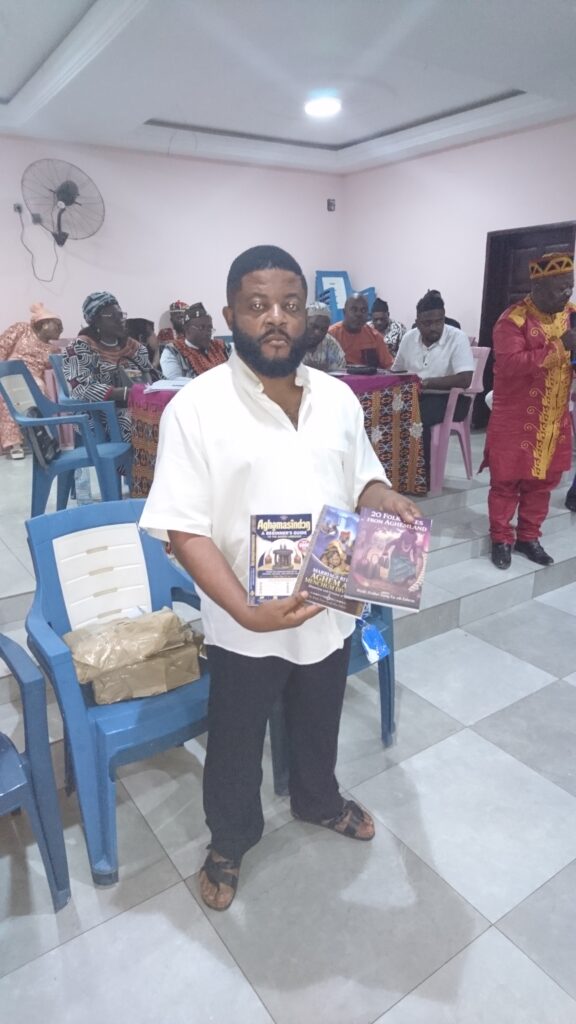
The cultural heritage of Aghem and the wider Menchum region has found a new written expression through the works of Wade Fang Fu-uh Mac-Edwin, whose books Folk Tales of Aghemland and Marriage Rites in Aghem and Menchum Division explore ancestral memory, social values and the challenges facing traditional institutions. The dedication ceremony held on Sunday, July 5, 2026, at Acom Hall in Biyem-Assi, Yaoundé, brought together readers, cultural actors and members of the community to celebrate a commitment to safeguarding identity through literature.
In an era where oral traditions are increasingly confronted by rapid social transformations, Wade Fang Fu-uh Mac-Edwin has chosen writing as a bridge between generations. Through his publications, the author seeks to preserve the voices of elders, the wisdom of ancestors and the cultural landmarks that have shaped Aghem society for centuries. His approach is not limited to documenting the past; it reflects a desire to keep heritage alive by making it accessible to contemporary audiences.
Born and raised in Kesughu, Aghem, in the Menchum Division, the multidisciplinary professional presents himself as a guardian of collective memory. His work draws from conversations with elders, storytellers and custodians of tradition whose knowledge has been transmitted across generations. By transforming these narratives into books, he gives permanence to stories that once existed mainly through spoken words shared in family homes, village squares and community gatherings.
Folk Tales of Aghemland opens a window into the cultural universe of the Aghem people through a collection of twenty traditional narratives. The stories reveal a society where nature, human relationships and moral principles remain deeply interconnected. Characters such as the intelligent and playful Wandong or the thoughtful Duhnzo embody lessons about responsibility, humility, courage and respect, offering readers reflections that extend beyond entertainment.
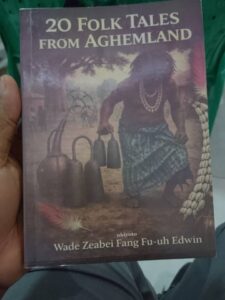
The collection also captures the landscapes and social environments that form the identity of the community. From the markets of Ndzendzam, Zonghokwo and Echuan to the hills of Kesughu and the peaceful surroundings of Weindughu, each narrative carries traces of a living civilization. The author presents these places not merely as geographical references but as spaces where memories, beliefs and collective experiences continue to shape belonging.
Beyond storytelling, Mac-Edwin’s second publication, Marriage Rites in Aghem and Menchum Division, examines one of the most significant institutions within traditional society. The book explores marriage as a cultural framework that connects families, ancestors and future generations. It highlights the symbolic importance of rituals, responsibilities and values that have historically guided unions within Aghem and neighbouring communities.
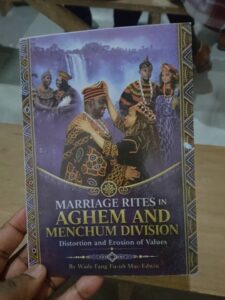
The author also raises questions about the transformation of these practices under the influence of modern lifestyles, economic pressures and changing social perceptions. Without rejecting evolution, the work invites reflection on the importance of maintaining meaning while adapting to contemporary realities. It argues that progress should not necessarily come at the expense of cultural foundations and collective identity.
Through these two books, Wade Fang Fu-uh Mac-Edwin positions literature as a tool for cultural dialogue. His writings encourage younger generations to rediscover their roots while inviting wider audiences to understand the richness of the Grassfields’ traditions. The initiative reflects a broader movement across Africa where authors are increasingly using written works to preserve indigenous knowledge threatened by disappearance.
The dedication ceremony in Yaoundé was therefore more than a literary event. It represented a moment of recognition for a cultural preservation effort built on patience, research and respect for community memory. By recording stories, customs and values, the author contributes to keeping alive a heritage whose strength lies in its ability to connect the past with the future.
With these publications, Wade Fang Fu-uh Mac-Edwin delivers a message that resonates beyond Aghem: a culture survives when it is remembered, shared and transmitted. His books stand as archives of identity, reminding readers that traditions are not only remnants of history but foundations upon which communities continue to build their future.