
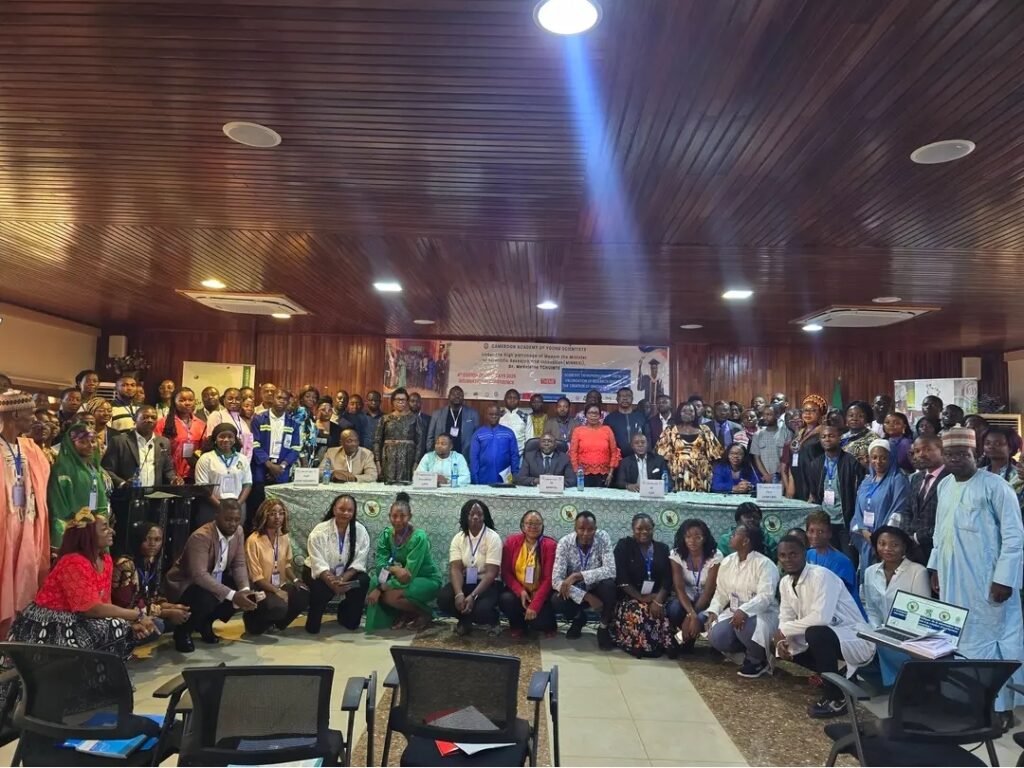
As Africa seeks to redefine its development pathways, the convergence of scientific research, innovation, and entrepreneurship is emerging as a decisive force capable of shaping sustainable futures and unlocking new economic horizons.
The fourth edition of the Cameroon Academy of Young Scientists Conference (CONFCAYS 2026) opened in Yaoundé with a clear and forward-looking vision: to elevate scientific inquiry beyond academic boundaries and position it as a cornerstone of high-impact innovation. Bringing together a diverse assembly of young researchers, experienced academics, policymakers, and private sector stakeholders, the conference established a fertile ground for dialogue, collaboration, and the co-creation of solutions adapted to the continent’s pressing challenges.
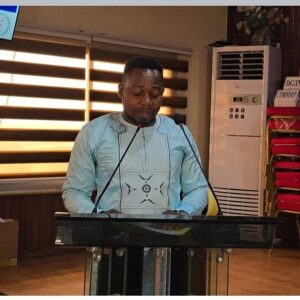
This momentum reflects the sustained commitment of the Cameroon Academy of Young Scientists (CAYS), whose members, under the leadership of Dr. Brice Tchakam Kamtchueng and with the coordination of Dr. Luria Leslie Founou, have successfully shaped a platform where intellectual rigor meets practical ambition. Their collective effort ensured both the scientific depth and the organizational coherence of an event designed to inspire and mobilize.
In her opening address, Dr. Luria Leslie Founou outlined the architecture and aspirations of the conference, emphasizing the necessity of fostering spaces where research outcomes can intersect meaningfully with innovation and entrepreneurial action. Her remarks set the tone for a gathering rooted in purpose and oriented toward tangible impact.
Dr. Brice Tchakam Kamtchueng followed with a resonant intervention that reaffirmed the strategic direction of CAYS. He highlighted the indispensable role of emerging scientists in advancing sustainable development, while articulating a vision in which research findings are not confined to laboratories but translated into concrete socio-economic solutions. His address underscored the importance of capacity building, institutional engagement, and the valorization of knowledge as a driver of progress.
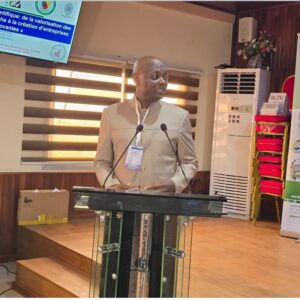
The intellectual depth of the opening ceremony was further enriched by an inaugural lecture delivered by Professor Eddy Ngonkeu, who explored the theme of scientific entrepreneurship. His reflection invited participants to rethink the trajectory of research by embracing its transformative potential, encouraging a shift from theoretical production to the creation of innovative enterprises capable of contributing to economic vitality and social advancement.
Throughout the day, the program maintained a careful balance between academic reflection and practical engagement. Following moments of exchange and a poster exhibition, participants attended a keynote presentation by Dr. Valérie Makoge, whose intervention shed light on the role of emerging health technologies in building scalable and impactful public health solutions across Africa. Her insights illustrated how innovation, when strategically harnessed, can address longstanding structural challenges.
A significant highlight emerged during the high-level panel discussion dedicated to the relationship between young researchers and the creation of sustainable enterprises. Moderated by Professor Rosemary Tonjock and enriched by contributions from Professor Marceline Djuijdje Ngounoue and Dr. Joseph Blaise Dongmo Lekagne, the session offered a nuanced exploration of existing constraints while illuminating pathways to success. The exchange revealed both the complexity of the ecosystem and the growing feasibility of transforming scientific ideas into viable ventures.
Innovation took on a more tangible form during the startup pitch and demonstration session, where young entrepreneurs presented a range of forward-thinking projects. From experimental aerospace concepts to assistive technologies designed for the visually impaired, as well as precision engineering solutions, these initiatives reflected a dynamic spirit of creativity and a deepening culture of problem-solving within the scientific community.
The afternoon unfolded through parallel scientific sessions, allowing for specialized discussions and deeper engagement across disciplines. These moments of focused exchange were complemented by continued networking opportunities, reinforcing connections and encouraging the circulation of knowledge among participants.
As the first day drew to a close, a coherent narrative had taken shape—one that places young scientists at the heart of Africa’s transformation. By bridging the gap between research and its real-world applications, CONFCAYS 2026 reaffirmed its role as a vital platform for nurturing a generation capable of innovating, collaborating, and leading with purpose. The discussions, rich in perspective and ambition, left participants with a renewed determination to advance science-driven solutions aligned with the continent’s aspirations for sustainable development.